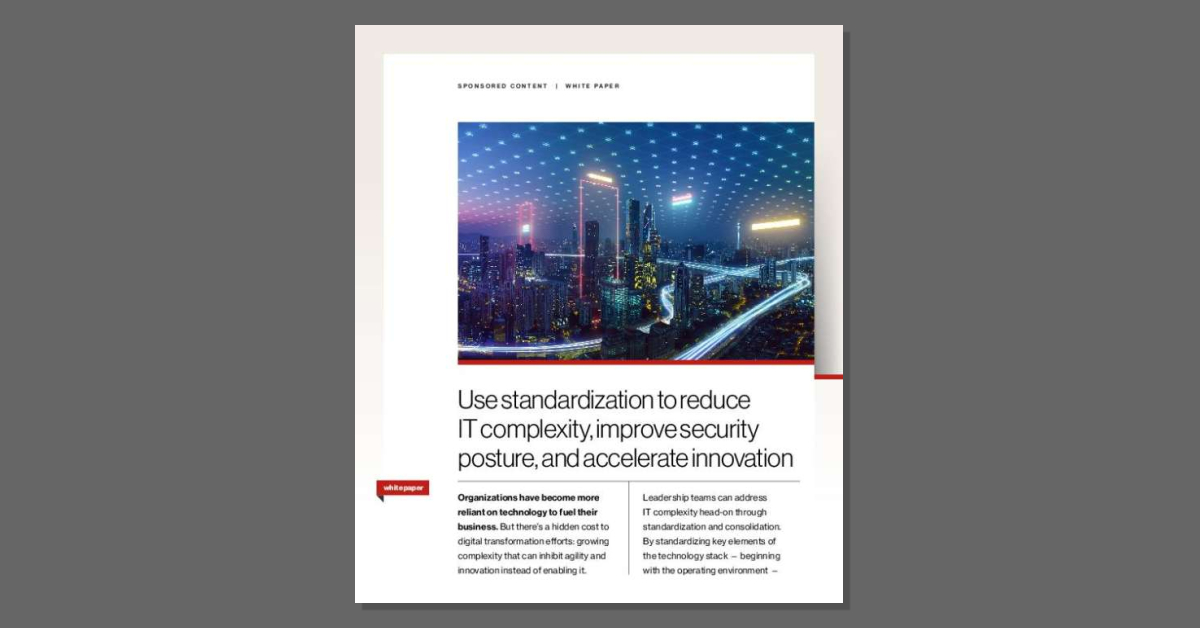
Most organizations find it effective to start with the operating environment, then expand from there using a phased, automated approach.
1. Begin with the operating system (OS)
- Different OS types or even different Linux distributions can handle workloads, containers, and databases in unique ways, adding complexity and risk.
- A standardized operating environment helps you:
- Increase uptime and accelerate provisioning and deployment.
- Improve IT and user productivity with consistent tools and processes.
- Optimize operational efficiency across all workloads.
- Gain better visibility into the environment across the organization.
- As Pelegrino puts it: if you don’t standardize on the OS first, you risk misalignment and wasted effort building applications and automation for multiple platforms.
2. Sequence changes to minimize disruption
- Start with applications that are at end-of-support, need major updates, or are candidates for retirement.
- Then move to smaller workloads (for example, those running on fewer than five OS instances) to build momentum and a track record of successful consolidations.
- This rolling approach frees developer capacity for larger migrations over time.
3. Use automation to scale standardization
- Automation is now a checklist capability for modern operating environments because it streamlines the path from development to production.
- Standard configurations are essential for scaling automation across the enterprise.
- A practical example: Salesforce migrated 200,000 machines from CentOS Linux to Red Hat Enterprise Linux using automation-driven tools (conversion playbooks, an orchestrator system, and configuration management). Automation helped them avoid downtime, maintain system health, and complete the migration ahead of the legacy OS end-of-support date.
- AI, including generative AI, can further enhance this by generating automation playbooks and documentation, and by powering operational chatbots that guide rollouts based on internal best practices.
By starting with the OS, sequencing changes thoughtfully, and leaning on automation, you can reimagine your IT foundation in a way that reduces risk, controls cost, and supports faster innovation.



 Sign in with LinkedIn